By:
Huaxin 2026-11-17Soft Serve vs. Packaged Ice Cream Vending Machines: Which to Buy?
Comparing soft serve and packaged ice cream vending machines? Learn the differences in restocking, cleaning, daily operations, and ideal venue types before you buy.
Choose a soft serve ice cream vending machine when customers will stop for a freshly dispensed dessert and someone on your team can refill, clean, and service it on schedule. Choose a packaged ice cream vending machine when the location mainly needs a quick grab-and-go option and your team can keep sealed products frozen from delivery through sale.
The difference becomes obvious on the first service visit. One operator brings mix and cups, checks how the machine dispenses, and cleans the parts that touch the mix. The other brings frozen stock, checks the freezer, rotates the products, and makes sure each item releases cleanly. Walk through both visits before you choose a machine.
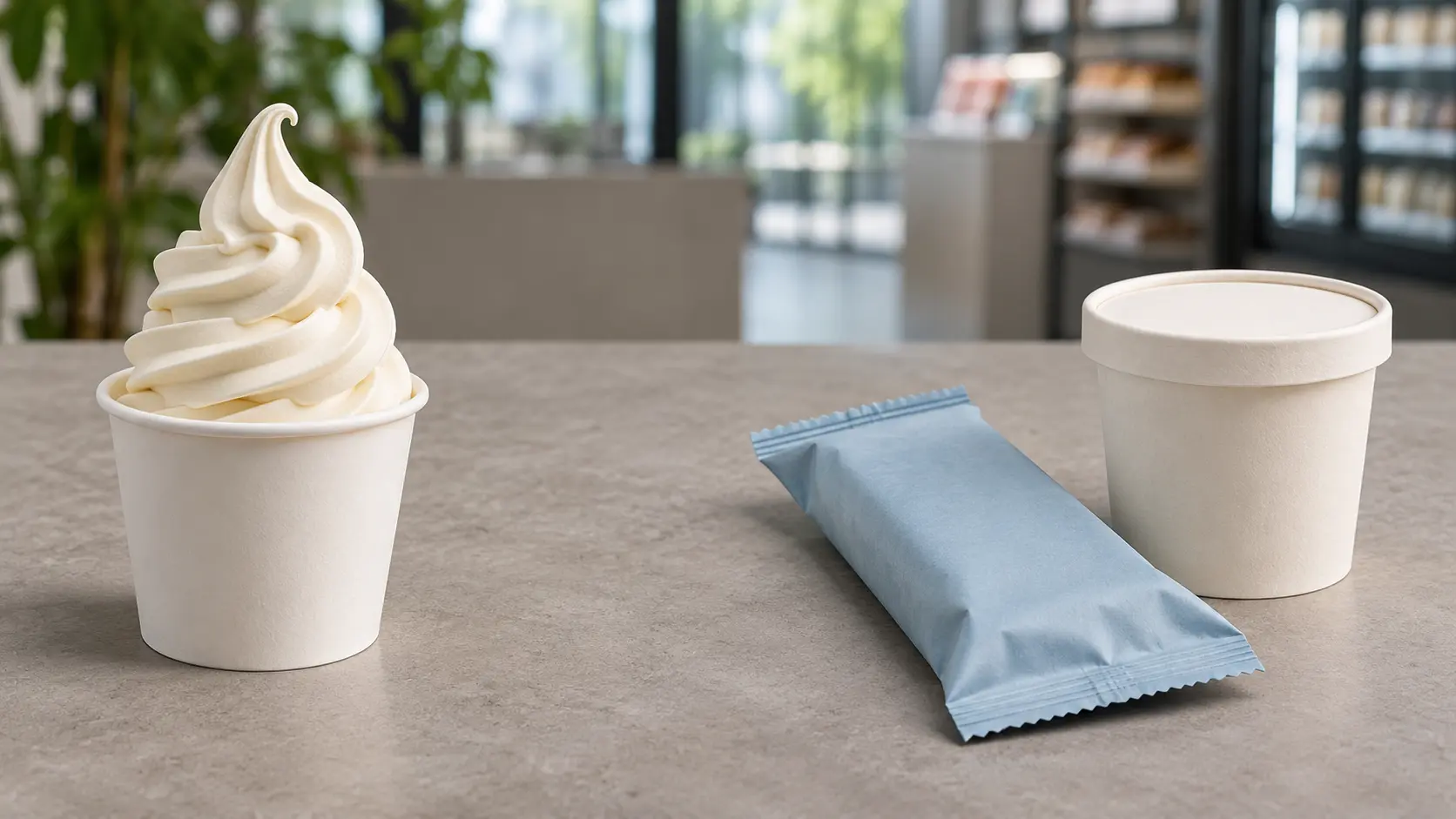
Caption: A cup of soft serve alongside two packaged formats, a wrapped bar and a sealed tub.
What Each Machine Sells
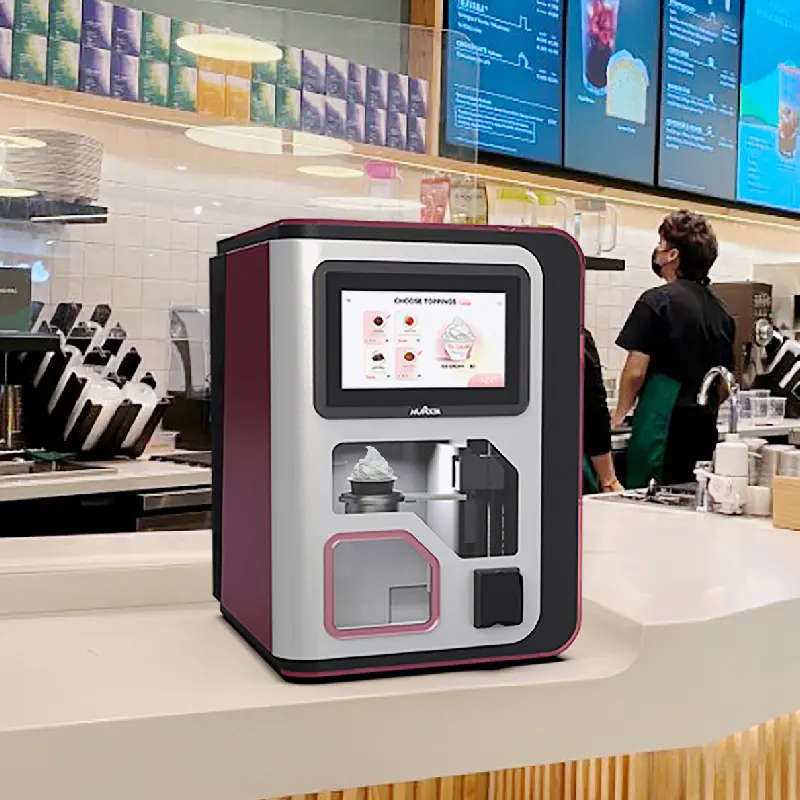
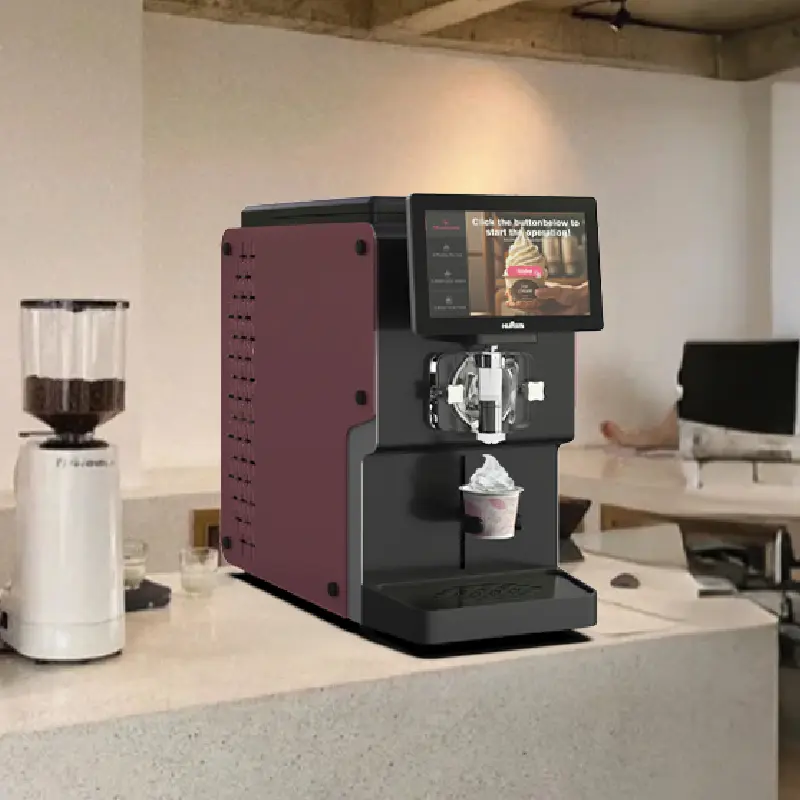
A soft serve vending machine freezes prepared mix and dispenses a portion after a customer orders. Some configurations offer sauces or toppings. If you want to serve two ice cream bases side by side, ask how many bases the machine can hold and dispense independently. A menu with several topping combinations can run on a single base.
A packaged ice cream vending machine keeps finished, sealed items frozen and releases the selected item. The menu can include bars, sandwiches, cones, or small tubs, provided the cabinet can store and dispense those exact packages. Give the supplier the package dimensions and weight, then send samples for a test vend. A demo with a different bar tells you little about whether your wrapper will catch on the way out.
Restocking, Cleaning, and Daily Operations
| Operating task | Soft serve vending machine | Packaged ice cream vending machine |
|---|---|---|
| Restocking | Refill approved mix, compatible cups, and any toppings or sauces on the menu. Check which supply runs out first. | Refill sealed products by item. Rotate stock by date and check wrapper condition. |
| Cleaning | Follow the model’s procedures for parts that touch the mix, the dispensing area, and any topping modules. Ask what the automatic cycle covers and which parts need hands-on cleaning. | Clean bins, seals, the pickup area, and spills. Follow the cabinet’s instructions for frost buildup and defrosting. |
| Cold storage | Store and handle mix as directed. Confirm what happens when the machine sends a temperature alert. | Keep products frozen in transit and at the site. Confirm who responds to a freezer alert and how they handle affected stock. |
| During a rush | Watch the full sequence from order to pickup. Check portion consistency and texture across consecutive orders using the menu you plan to sell. | Watch whether each package releases and reaches the pickup area. A popular item can sell out while other selections remain available. |
| Typical interruptions | An empty cup stack, a shortage of mix, a failed dispensing cycle, or a cleaning shutdown can interrupt sales. | A sold-out selection, a package that fails to release, or a freezer alarm can interrupt sales. |
Ask each supplier to show one complete service visit. Time the work from the moment the operator takes the unit out of service until it is ready for a customer again. Include restocking, cleaning, recording any checks, and running a test sale. Then write down who can cover that visit when the usual operator is away.
For automatic cycles and hands-on tasks, see our ice cream vending machine cleaning guide. In the U.S., the FDA Food Code serves as a model for adoption. Check with the local authority about the requirements that apply to your vending equipment, products, and site.
When Soft Serve Makes Sense
Soft serve is worth evaluating at a family entertainment center, cinema lobby, or mall food court where people already pause for dessert. Look for a spot where customers can see the menu, step out of the walking path, and wait for pickup. A family leaving the food court may stop for a swirl and toppings if there is room to order together. A machine beside the parking exit may see the same family when everyone is ready to leave.
Before the trial, agree who will bring in mix, where cleaning supplies and any required water are available, how staff will handle waste, and when they can take the unit out of service. Then test the busiest 15 minutes with your planned cup, menu, and payment setup. Record cups ordered, cups handed over, and cups still outstanding when the window ends. Use the test record in our cups-per-hour guide.
When Packaged Ice Cream Makes Sense
Packaged ice cream is worth evaluating in an office break room or a hotel convenience area where customers want a familiar dessert they can take with them. It also suits an operator who already stocks frozen cabinets and can keep stock frozen between route stops.
Start with a short menu. Test your specific products from the first unit loaded to the last in the bin. Look for a wrapper that catches, a tub that tips, or a lid that comes loose on delivery. During the trial, count leftover stock by selection. A half-full freezer can still be sold out of the bar regular customers came for.
What to Check Before You Buy
-
Walk the site at its busiest. Watch where people pause, where a line would form, and whether staff can reach the machine for service.
-
Use your actual products. For soft serve, test the intended mix, cups, and toppings. For packaged vending, send the exact bars, tubs, or sandwiches you plan to stock.
-
Run several paid transactions in sequence. Record time to pickup, successful deliveries, and what happens when payment succeeds and the product fails to arrive.
-
Watch a service visit. Record what the operator brings, how long the machine stays out of service, what gets discarded, and how staff handle an alarm.
-
Assign a backup. Confirm who can refill or clean the machine and who can take it out of service if something goes wrong during a weekend rush.
If both formats pass the test, choose based on how customers use the venue. A fresh serving can be part of an afternoon at an arcade. A wrapped bar can be the dessert someone takes back to a hotel room. Match the format to the time customers have and the service visits your team can reliably cover.
Frequently Asked Questions
Does sealed packaging make a frozen vending machine easier to clean?
Sealed products eliminate the liquid-mix circuit and its cleaning routine. The operator still needs to clean the cabinet and pickup area, deal with damaged packages or spills, and maintain the freezer according to the manufacturer’s instructions.
Will packaged ice cream vend faster during a rush?
A packaged machine can release a ready-made item without a preparation cycle. The actual handoff time depends on payment, the dispensing mechanism, and whether each package clears the pickup path. Compare both formats using the same timed test.
Can a soft serve machine also sell wrapped bars?
Confirm the machine’s supported functions with the manufacturer. Selling wrapped bars requires frozen storage and a dispensing mechanism suited to the specific packages.
Discuss Your Soft Serve Vending Setup
Send Huaxin your venue type, busiest selling window, planned menu, and who will handle service visits. We can use those details to discuss a soft serve configuration and plan a test with your own mix and cups.
References
-
Fastcorp Vending. DIVI Setup & User Manual, Rev. 9.
-
U.S. Food and Drug Administration. Food Code 2022.
PREVIOUS ARTRCE
Where Should You Put an Ice Cream Vending Machine in a Mall?
NEXT ARTRCE

About the Author: Huaxin Company Pioneer of Smart Ice Cream Vending Machines, with 13 years of R&D and manufacturing expertise. Holds CE, RoHS, NSF, and ETL international certifications. Holds over 24 patents in China and commands a 70% market share.